Quantum cloud computing services, compared
Send your first job to a real quantum computer: which cloud reaches which machine, what each asks of you, and where hardware time is free.

Quantum cloud computing means using a quantum computer over the internet. You write a job on your own machine, a provider runs it on its hardware, and the results come back. Most jobs are gate-model circuits written with an SDK such as Qiskit. Some machines take analog programs or optimization problems instead.
Three kinds of service sell this access. Multi-vendor clouds such as Amazon Braket and Azure Quantum resell several makers' machines. Makers such as IBM run their own clouds. Platforms such as qBraid route your job to someone else's machine. Most machines sit on more than one of these.
IBM's Open Plan, Open Quantum and Qollab each give some hardware time for free. To send a first job, follow IBM's free route or run the same circuit on Qollab.
Which route fits which need
The machines table lists the clouds that reach each machine.
- Free hardware time with no application: IBM's Open Plan, Open Quantum's Spark Credits or Qollab's monthly credits. Where hardware time is free gives the terms.
- Several makers' machines from one account: Amazon Braket, Azure Quantum, qBraid or Open Quantum. Scaleway and OVHcloud sell access to European machines.
- IBM's processors: IBM Quantum Platform. Its free Open Plan reaches three 156-qubit Heron processors.
- Trapped ions: IonQ Forte on Braket, Azure, qBraid, Open Quantum or Qollab. Quantinuum H2 on Azure or Quantinuum Nexus. AQT IBEX Q1 on Braket or Scaleway.
- Neutral atoms in analog mode: QuEra Aquila on Braket. Pasqal's FRESNEL on Pasqal Cloud, Azure or Scaleway.
- Annealing, for optimization problems: D-Wave Leap.
- No install, from a browser: IBM Quantum Composer builds circuits by drag and drop and runs them on IBM machines once you sign in. Qollab runs Python on IonQ Forte.
Where hardware time is free
Free simulators are far more common than free hardware time; Free quantum computer simulators compares them.
With a sign-up:
- IBM Open Plan: up to 10 minutes of runtime per rolling 28-day window. IBM has opened ibm_fez, ibm_marrakesh and ibm_kingston, three 156-qubit Heron processors, to Open Plan users. Open Plan instances sit in IBM's us-east region and run jobs and batches. Sessions need a paid plan.
- Open Quantum: $50 of compute every 90 days, as 25 Spark Credits. The credits work only on Public Compute, which routes jobs through qBitTensor Labs and a decentralized network, and they expire after 90 days. Open Quantum's machines are IonQ Forte, Rigetti Cepheus, IQM Emerald and Garnet, and AQT IBEX Q1.
- Qollab: every account gets 100 credits for IonQ Forte hardware every 30 days, and unspent credits lapse. The runner quotes each run before it spends, so start with a small shot count.
With conditions:
- IBM's one-time offer: 180 minutes over 12 months, then back to the standard 10. A non-trial account qualifies once it has used 20 minutes of runtime within a 12-month period. IBM's plans page calls the 180 minutes "additional"; its announcement sets the terms.
- Quantum Inspire: free for non-commercial use on QuTech's Tuna-5, Tuna-9 and Tuna-17 chips. A person approves each account.
- D-Wave's Leap Quantum LaunchPad: a three-month trial on D-Wave's annealers. You apply, and not every application is accepted.
- IonQ Research Credits: up to $10,000 in funding for academic researchers, by application.
- Qollab Grant Program: IonQ compute credits for open-source work on Qollab. Porting existing work or extending a Qollab project earns up to $10,000, and original work up to $20,000. The team reviews each submission, and the credits expire three months after they reach your account.
Advertised, but offline: Alice & Bob offers one free QPU hour a month on its Boson 4 cat-qubit chip, through Google Cloud Marketplace. Boson 4 is offline for a lengthy maintenance operation.
A first hardware job
On IBM's Open Plan
On IBM's Open Plan, you go from sign-up to a real machine without a payment or an application:
- Sign in to IBM Quantum Platform with an IBM Cloud account and create an Open Plan instance in the us-east region. IBM Cloud asks a new account for a credit card to verify identity; the Open Plan itself costs nothing.
- Generate an API key on the dashboard and copy your instance's CRN.
- Install the SDK with
pip install qiskit qiskit-ibm-runtime. - Save the key once, then run the code below.
from qiskit import QuantumCircuit
from qiskit.transpiler import generate_preset_pass_manager
from qiskit_ibm_runtime import QiskitRuntimeService
from qiskit_ibm_runtime.executor_sampler import Sampler

# Once: QiskitRuntimeService.save_account(token="<your-api-key>", instance="<CRN>")
service = QiskitRuntimeService()
backend = service.least_busy(simulator=False, operational=True)

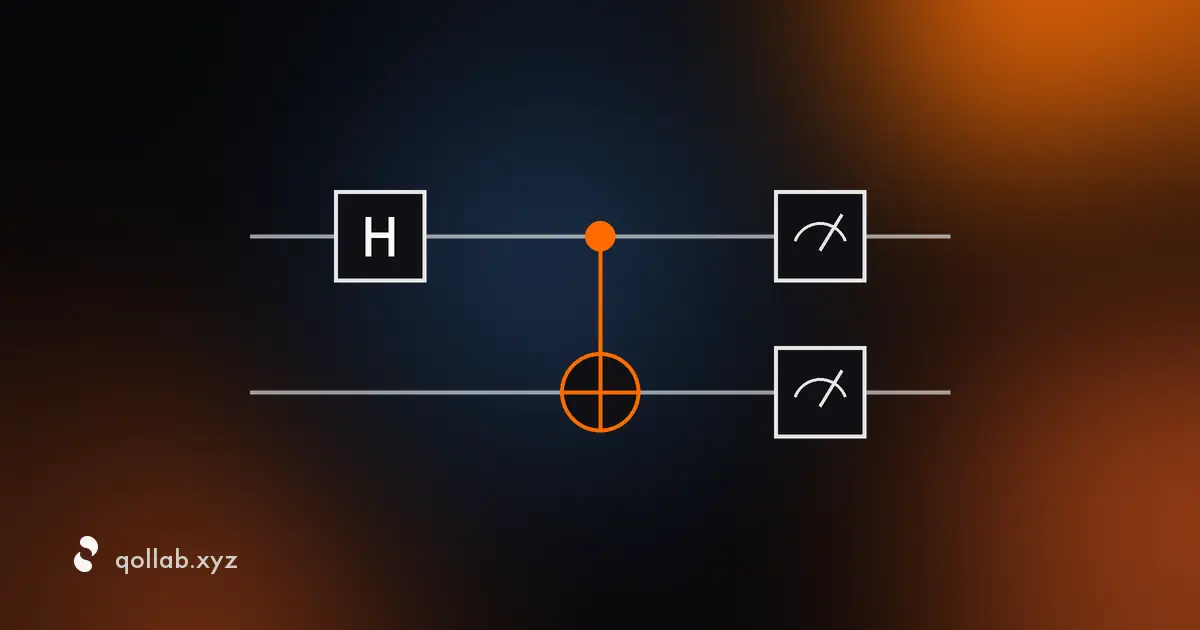
qc = QuantumCircuit(2)
qc.h(0)
qc.cx(0, 1)
qc.measure_all()

pm = generate_preset_pass_manager(backend=backend, optimization_level=1)
isa_qc = pm.run(qc)             # rewrite the circuit for this machine's gates

job = Sampler(mode=backend).run([isa_qc], shots=1000)
print(job.job_id())             # the job waits in IBM's queue
counts = job.result()[0].data.meas.get_counts()
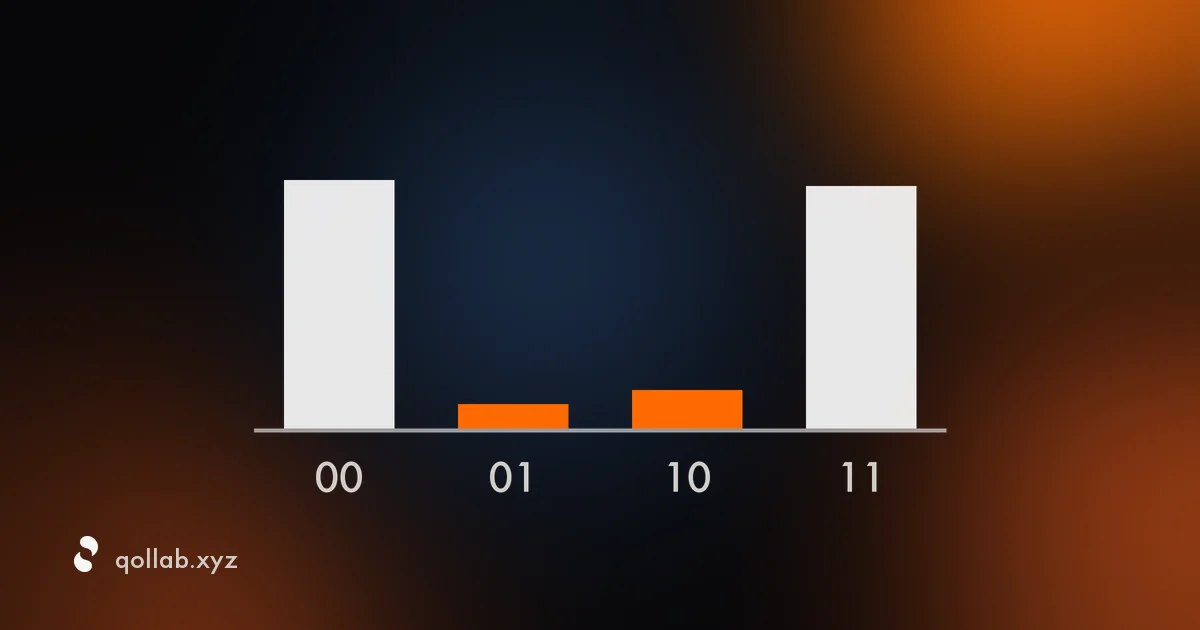
print(counts)                   # mostly 00 and 11
The code picks the least busy machine your instance can use and rewrites the circuit into that machine's native gates. It then sends 1,000 shots. job.result() waits until the job has run. On hardware, noise adds a few 01 and 10 results to the 00 and 11. The Sampler import is the one IBM introduced in qiskit-ibm-runtime 0.50, which marks the older from qiskit_ibm_runtime import Sampler as legacy.
To try the code first without spending minutes, install qiskit-aer, import FakeFez from qiskit_ibm_runtime.fake_provider, and replace the two service lines with backend = FakeFez(). That runs a local copy of ibm_fez, with its noise, and needs no account.
On the other clouds
The other clouds change four things: the install, the sign-in, the device ID and the call that submits. These lines follow each cloud's own quickstart.
| Cloud | Install and sign in | Pick a machine | Submit and read | Free first run |
|---|---|---|---|---|
| Amazon Braket | pip install amazon-braket-sdk. AWS credentials with the AmazonBraketFullAccess permission. Accept the third-party device terms once in the console | AwsDevice("arn:aws:braket:us-west-1::device/qpu/rigetti/Cepheus-1-108Q") | task = device.run(circuit, shots=1000), then task.result().measurement_counts | LocalSimulator() runs on your machine at no cost |
| Azure Quantum | pip install "qdk[azure,qiskit]", az login, then Workspace(resource_id="...") | AzureQuantumProvider(workspace).get_backend("quantinuum.qpu.h2-1") | job = backend.run(circuit, shots=100), then job.result().get_counts(circuit) | The ionq.simulator and rigetti.sim.qvm targets cost nothing. The subscription and its storage account are still needed |
| IonQ Quantum Cloud | pip install qiskit-ionq. An API key in IONQ_API_KEY | IonQProvider().get_backend("qpu.forte-1") | job = backend.run(qc, shots=1000), then job.get_counts() | The simulator backend, ideal or with noise_model="forte-1". Hardware jobs are paid, once IonQ gives your project access and a budget |
The same circuit on Qollab
On Qollab the backend is created for you, so the install, sign-in and device lines disappear. Qollab holds the IonQ account and key. You need a free Qollab account to run on hardware. IonQ is Qollab's hardware partner, and IonQ Forte is the only hardware Qollab reaches. The snippets above run in your own Python environment; this one runs in Qollab's playground.
# 'backend' is pre-created for you in the Qollab Playground.
from qiskit import QuantumCircuit

qc = QuantumCircuit(2, 2)
qc.h(0)
qc.cx(0, 1)
qc.measure([0, 1], [0, 1])

job = backend.run(qc, shots=1000)
counts = job.result().get_counts()
print(counts)                   # e.g. {'00': 491, '01': 2, '10': 6, '11': 501}
To run the Qollab example:
- Press Run on Qollab under the code. The project opens in a new tab.
- Press Run on Qollab there. The Run dialog opens, headed Select QPU.
- Under the remote simulators, pick IonQ Forte 1 for a run with Forte's noise model. Signed out, the dialog marks it Credits apply; the run still costs nothing.
- To run on the machine itself, sign in. When IonQ reports its machines, the same dialog lists Forte 1 and Forte Enterprise 1 hardware, which spend credits.
Without an account you get one run. On IonQ, each run takes one job, so pass backend.run a single circuit. The playground needs a browser with WebAssembly JSPI: a recent Chrome, Edge or Opera, or Firefox 153 or later.
The services compared
Sign up and run
Each service in this table lets anyone create an account and send a job to real hardware, without an application. Prices change often, so each row links the service's own rates. Can you buy a quantum computer? prices two circuits across several of them.
| Service | Hardware it reaches | What getting in takes | Free route | How it bills |
|---|---|---|---|---|
| Amazon Braket | AQT IBEX-Q1; IonQ Forte-1 and Forte-Enterprise-1; IQM Garnet and Emerald; QuEra Aquila; Rigetti Ankaa-3 and Cepheus-1-108Q | An AWS account that includes Braket (AWS's newer sign-up leaves it out until you activate advanced AWS features), Braket permissions, and a one-time agreement for third-party devices | The local simulator in the SDK | Per task plus per shot, or hourly reservations |
| Azure Quantum | IonQ Forte 1 and Forte Enterprise 1, and Aria 1, which IonQ lists as retired; Pasqal FRESNEL and FRESNEL_CAN1; Quantinuum H2-1 and H2-2; Rigetti Cepheus-1-108Q | An Azure subscription, a workspace and a storage account. Which providers you get depends on your billing country | IonQ and Rigetti cloud simulators and Quantinuum syntax checkers. Azure Quantum Credits ended on 1 June 2025 | By provider: gate-shots with a minimum, subscriptions, execution time or QPU-hours, plus Azure storage |
| IBM Quantum Platform | Heron processors of 156 qubits and Nighthawk processors of 120 | An IBM Cloud account, an API key and an instance. Open Plan instances in us-east only | The Open Plan, and local testing mode | Per second of QPU time on Pay-As-You-Go, minutes on Flex and Premium |
| Open Quantum | IonQ Forte-1 and Forte Enterprise; Rigetti Cepheus-1-108Q; IQM Emerald and Garnet; AQT IBEX Q1 | A free account, no credit card | $50 every 90 days on Public Compute | Per task plus per shot. Public Compute costs half as much as Private |
| OVHcloud | Pasqal Orion Beta (FRESNEL and FRESNEL_CAN1); Quandela Belenos | An OVHcloud account and a Public Cloud project | Emulation credits through its startup program or free trial | Per second of QPU runtime |
| Pasqal Cloud | FRESNEL (France) and FRESNEL_CAN1 (Canada), analog | Pay-as-you-go through Google Cloud Marketplace, or a contract | The Explorer plan's free emulator, EMU_FREE | Google Cloud billing on Marketplace; under a contract, credits by the hour or the shot |
| qBraid | AQT IBEX Q1; IonQ Forte-1 and Forte-Enterprise-1; IQM Emerald and Garnet; Pasqal FRESNEL; QuEra Aquila; Rigetti Cepheus-1-108Q | A free account, no credit card | Free simulators. Hardware jobs cost credits | Credits, at 100 to the dollar, at provider-set rates |
| Qollab | IonQ Forte 1 and Forte Enterprise 1 | A free Qollab account. No IonQ account or SDK install | 14 simulators, and 100 credits for hardware every 30 days | Credits from the monthly allowance and the Grant Program, quoted before a run; there is no purchase |
| Scaleway | AQT IBEX; IQM Garnet, Emerald and Sirius; Pasqal FRESNEL and DISTRIQ; Quandela Ascella, Altair and Belenos | A Scaleway account, a project ID and an API key | Three Quandela emulators | Per shot, per hour of emulation, or by booking |
By application, contract or approval
| Service | Hardware | How you get access |
|---|---|---|
| AQT ARNICA | IBEX Q1, 12 qubits | Through AQT's sales team. Pay-as-you-go jobs run in set weekday windows |
| D-Wave Leap | Advantage2 and Advantage annealers | A sign-up gives a Trial Plan for demos, without the API token that submits your own problems. Hardware needs a paid plan or an accepted LaunchPad application. Leap is open in listed countries |
| IonQ Quantum Cloud | Forte 1 and Forte Enterprise 1, 36 qubits each | A free direct account runs IonQ's cloud simulators; hardware access comes through IonQ's sales team. Through Google Cloud Marketplace, IonQ bills hardware jobs by gates and shots |
| OQC Cloud | Toshiko, 32 qubits | Email OQC to set up an account |
| Quantinuum Nexus | Helios-1, 98 qubits, for existing H2 customers; H2-1 and H2-2, 56 qubits each | Register your interest. Use is billed in HQCs, Quantinuum's job-cost unit, against a subscription |
| QuEra | Aquila, 256 qubits, analog | Premium access by inquiry. Amazon Braket is QuEra's public route |
| Quantum Inspire | Tuna-5, Tuna-9 and Tuna-17 | Free for non-commercial use, once a person approves your account |
| Rigetti QCS | Cepheus-1-108Q | Request an account through a form. On-demand jobs bill per microsecond of QPU time |
IQM Resonance reaches IQM's Garnet, Emerald and Sirius. Quandela Cloud reaches Ascella and Belenos. Both take an account and an API token; check each maker's site for current plans.
Fujitsu offers its 256-qubit machine to companies and research institutions, by inquiry.
Origin Quantum Cloud and SPINQ Cloud are run from China. Origin Quantum Cloud reaches the 180-qubit Origin Wukong and says it serves users worldwide. SPINQ Cloud lists machines of 25, 3 and 2 qubits.
Machines and where they run
Qubit counts are as the maker states them, or as a cloud does where the maker's pages do not. A gate-based machine runs circuits. An analog machine runs a program for how its atoms evolve. An annealer solves optimization problems. Their qubit counts do not compare with a gate-based machine's.
| Machine | Maker | Kind | Qubits | Where you can reach it |
|---|---|---|---|---|
| Advantage2, Advantage | D-Wave | Annealing, superconducting | Advantage2: 4,400+ | D-Wave Leap |
| Aquila | QuEra | Analog, neutral atom | 256 | Amazon Braket, qBraid, QuEra |
| Ascella, Altair, Belenos | Quandela | Gate-based, photonic | 6, 10, 12 | Ascella and Belenos: Quandela Cloud, Scaleway; Belenos also on OVHcloud. Altair: Scaleway |
| Boson 4 | Alice & Bob | Gate-based, superconducting cat qubits | 1 cat qubit per backend | Felis Cloud on Google Cloud Marketplace (offline) |
| Cepheus-1-108Q | Rigetti | Gate-based, superconducting | 108 | Rigetti QCS, Amazon Braket, Azure Quantum, qBraid, Open Quantum, BlueQubit |
| Ankaa-3 | Rigetti | Gate-based, superconducting | 84 | Amazon Braket |
| FRESNEL, FRESNEL_CAN1 | Pasqal | Analog, neutral atom | 100 | Both on Pasqal Cloud, Azure Quantum, Google Cloud Marketplace, OVHcloud and Scaleway; FRESNEL also on qBraid. Scaleway lists Pasqal's FRESNEL and DISTRIQ |
| Forte 1, Forte Enterprise 1 | IonQ | Gate-based, trapped ion | 36 | IonQ Quantum Cloud, Google Cloud Marketplace, Amazon Braket, Azure Quantum, qBraid, Open Quantum, Qollab |
| Garnet, Emerald, Sirius | IQM | Gate-based, superconducting | 20, 54, Sirius 16 working of 24 (Scaleway's figure) | Garnet and Emerald: IQM Resonance, Amazon Braket, Scaleway, qBraid, Open Quantum. Sirius: IQM Resonance, Scaleway |
| Heron, Nighthawk | IBM | Gate-based, superconducting | 156, 120 | IBM Quantum Platform |
| Helios-1 | Quantinuum | Gate-based, trapped ion | 98 | Quantinuum Nexus, for H2 customers |
| H2-1, H2-2 | Quantinuum | Gate-based, trapped ion | 56 | Quantinuum Nexus, Azure Quantum |
| IBEX Q1 | AQT | Gate-based, trapped ion | 12 | AQT ARNICA, Amazon Braket, Scaleway, qBraid, Open Quantum |
| Toshiko | OQC | Gate-based, superconducting | 32 | OQC Cloud |
| Tuna-5, Tuna-9, Tuna-17 | QuTech | Gate-based, superconducting | 5, 9, 17 | Quantum Inspire |
| Wukong | Origin Quantum | Gate-based, superconducting | 180 | Origin Quantum Cloud; qBraid's SDK with an Origin key |
Makers without a public sign-up today:
- Google Quantum AI: Willow has 105 qubits. Google says "No public access to the service is available at this time"; its early access program for Willow went to selected researchers.
- Atom Computing: its AC1000 is installed and operated on premises.
- Infleqtion: cloud access to its Sqale computer is in private beta.
- Microsoft: announced its Majorana 2 chip in June 2026. Azure Quantum lists no Microsoft hardware.
- IonQ Tempo: a system with a target of 100 qubits, with cloud access listed for late 2026.
Retired or changed since 2024
- Xanadu's Quantum Cloud is no longer available, Xanadu's documentation says.
- IBM removed the Lite Plan on 14 March 2025 and closed IBM Quantum Platform Classic on 1 July 2025. Its Eagle processors are retired. In July 2026 IBM renamed Qiskit Runtime to IBM Quantum Compute Service, with no code changes.
- IonQ lists Aria 1, Aria 2 and Harmony as retired. Braket removed Aria-1 on 2 March 2026; Azure's target list still shows it.
- Quantinuum retired H1-1 on 15 October 2025. It deprecated job submission through pytket-quantinuum, slated for removal by 30 November 2025.
- Amazon Braket added AQT IBEX-Q1 in November 2025 and Rigetti Cepheus-1-108Q in April 2026.
- Azure Quantum has supported four regions since 30 September 2025. Microsoft announced that workspaces in the other regions would be deleted.
Questions people ask
What is quantum computing as a service?
Quantum computing as a service (QCaaS) is access to quantum hardware and simulators over the internet, paid by use or by subscription. You write the program on your own machine and pay for the hardware time it uses. Most services on this page sell it, and several have a free route.
What is quantum computing in cloud computing?
Quantum computing in cloud computing means quantum hardware offered inside a general cloud. Amazon Braket on AWS and Azure Quantum on Microsoft Azure list quantum processors and simulators next to ordinary servers. A quantum job then uses the same account, permissions and billing as your other cloud resources. On Braket, the results also land in an S3 bucket.
Can I use a real quantum computer for free?
Yes. IBM's Open Plan gives up to 10 minutes per rolling 28-day window on its Heron processors. Open Quantum gives $50 of compute every 90 days, and every Qollab account gets 100 credits for IonQ Forte every 30 days. Where hardware time is free lists the terms and the conditional offers.
Is Google's quantum computer available in the cloud?
Not publicly. Google says access to its Quantum Computing Service is granted to an approved list, and that no public access is available. Willow's early access went to selected researchers. Google Cloud Marketplace does sell other companies' quantum services: IonQ, Pasqal and Alice & Bob.
Which companies offer quantum cloud computing?
Makers that run clouds for their own machines include IBM, IonQ, Quantinuum, D-Wave, Rigetti, IQM, Pasqal, AQT, OQC and Quandela. Amazon, Microsoft, Scaleway and OVHcloud resell several makers' machines, and qBraid and Open Quantum route jobs to them. The machines table shows which clouds reach each machine.
A snapshot, October 2026
Every service, machine and term on this page was read on the vendors' own pages between 14 and 21 October 2026. Devices join and leave clouds, and free offers start and end, from month to month. Check the linked page before you plan around it. Where a vendor's own pages disagree, this page follows its device or target list.
The IBM code ran on 21 October 2026 against FakeFez, IBM's local copy of ibm_fez. The Braket submit and result lines ran on Braket's local simulator. Versions: qiskit 2.6.0, qiskit-ibm-runtime 0.50.0, qiskit-aer 0.18.0 and amazon-braket-sdk 1.127.3.post0. The Azure and IonQ lines follow their documentation. The Qollab example ran on qollab.xyz the same day.
Related
More guides
Stay in the loop.
Get the latest tutorials, demos, and project showcases straight to your inbox. No noise, just the good stuff.
Enable JavaScript to sign up.
Qollab updates only. Unsubscribe any time. Privacy Policy.