University of Waterloo winners: Qollab x IonQ Hackathon 2026
The winning project from nine entered at the University of Waterloo node.
At the University of Waterloo node of the Qollab x IonQ Hackathon 2026, 21 teams signed up, 10 of them solo. Of the 21, 15 were on the student track and six on the professional track. The online build weekend ran from 7 PM ET on October 9 to 7 PM ET on October 11. In that time, nine of the 21 teams entered one project each.
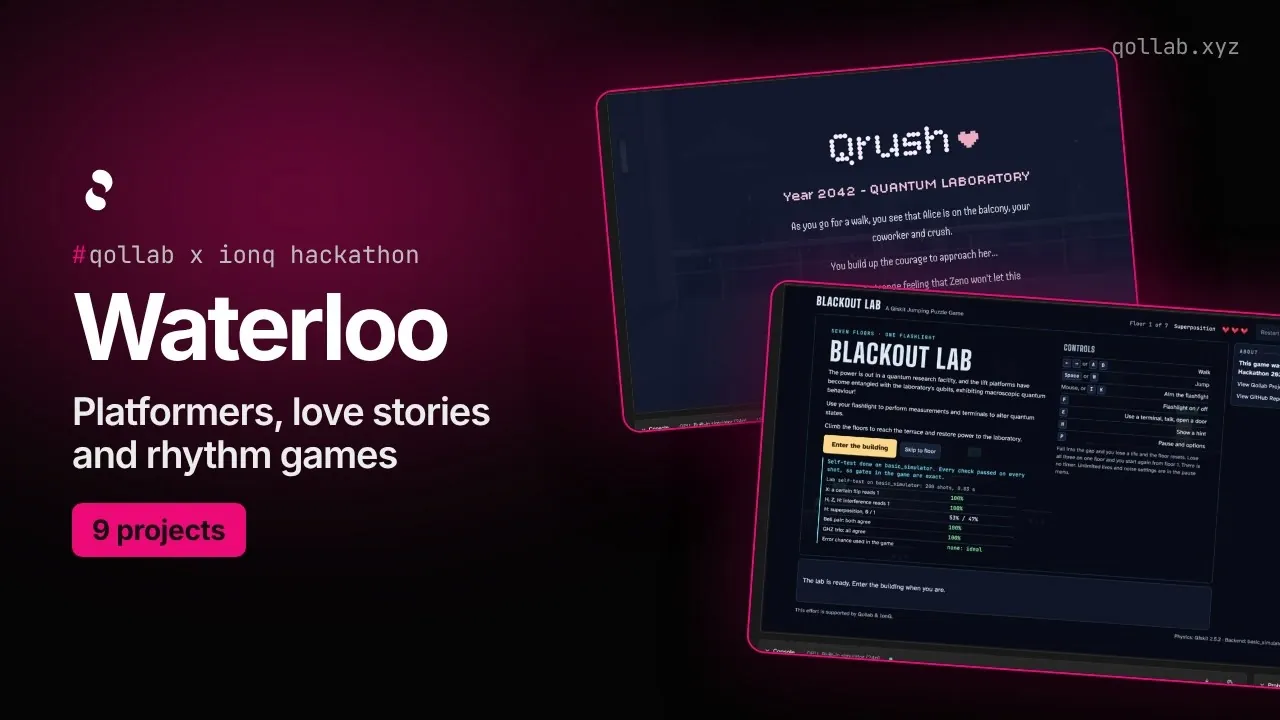
The projects range from the quantum compass of monarch butterflies and the vibrations of a hydrogen sulfide molecule to robot motion prediction. Every one of them is open source on Qollab.
The University of Waterloo node
The University of Waterloo in Canada signed on in late September. John Donohue and Kayleigh Platz of the Institute for Quantum Computing (IQC) led the node. Kayleigh is IQC's director of communications and strategic initiatives. John, its senior manager of scientific outreach, brings quantum information science to the public and to high school and university students. His work includes two of IQC's schools, the Quantum School for Young Students and the two-week Undergraduate School on Experimental Quantum Information Processing.
Three judges scored the projects on novelty, technical execution, impact and documentation: John Donohue and Huan Yi Shen of IQC, and a guest from IonQ.
Node winner: Blackout Lab
Blackout Lab is a puzzle game in which players restore power across seven lab floors using quantum gates. Team Qute bits, D3vsinh and yusuf on Qollab, entered it on the student track. The game's hands-on challenges cover superposition, interference, entanglement, noise and teleportation.
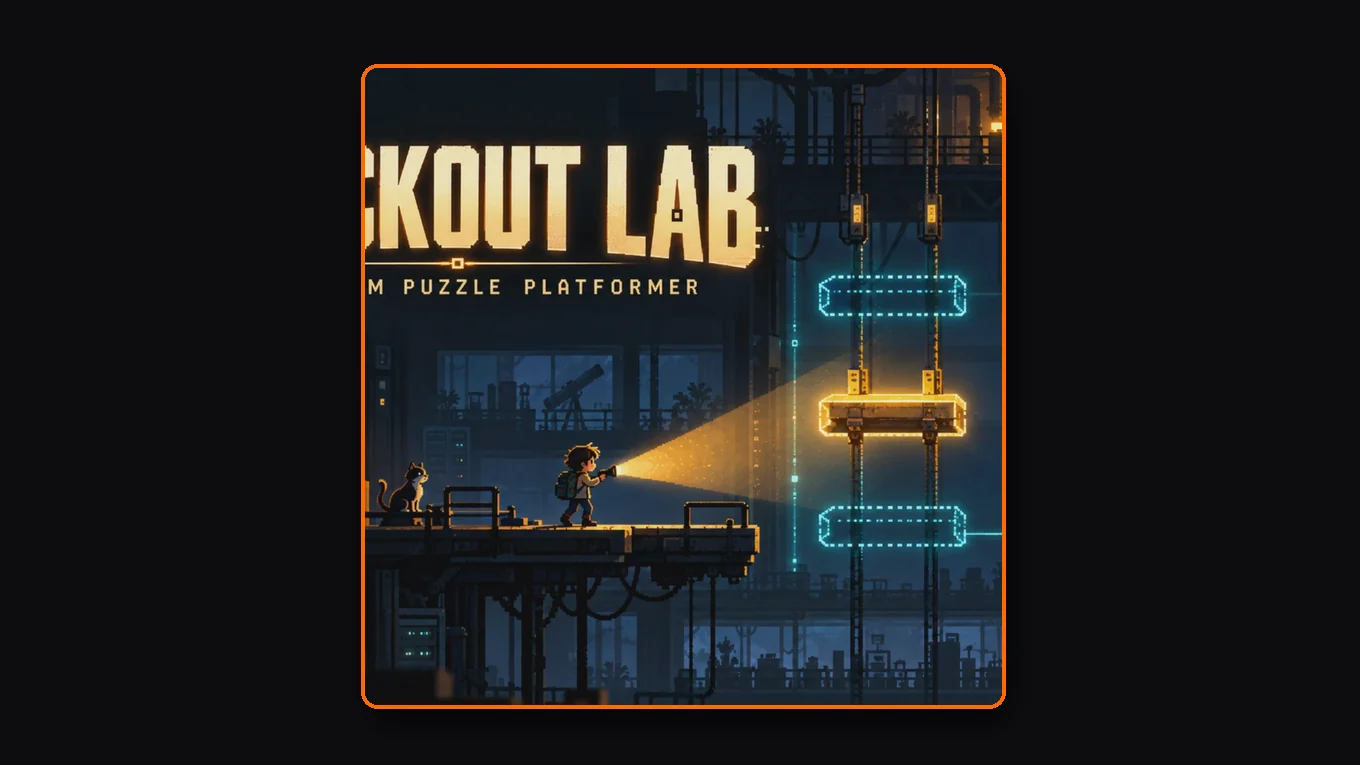
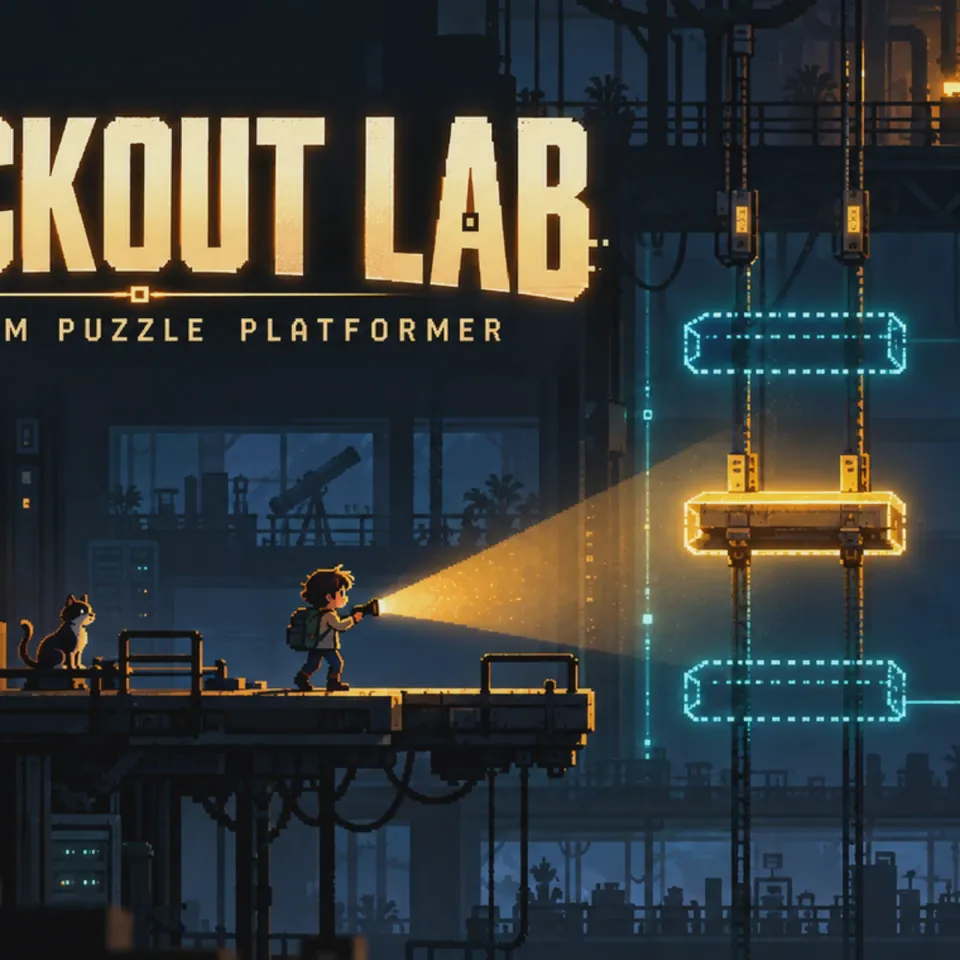 Blackout LabA quantum puzzle game set in a lab during a blackout.
Every other project from the University of Waterloo
Among the node's other projects, three explain noise and error correction. They are Quantum Noise Visualizer, from mnseolee and Kronos; Shor Code Demonstration, from RugvedK and JackW; and Qubit Tempo, from kevinshen, amshanaar and owen. Cryptography and quantum communication come up as well, in 3anur's Qrush and lanawaddell's Conduit.
The other 8 projects entered at the node, A to Z.
- butterflies: Monarch butterflies - a quantum compass.
- Conduit: When Should a Satellite Quantum Memory Hold or Send?: A seeded simulation of satellite-to-ground entanglement delivery with a finite quantum memory, plus an exploratory QAOA benchmark of when to hold or send a stored pair.
- H₂S Vibrational Dynamics: Anharmonic Modeling and Trotterized Quantum Simulation: A Qiskit-based real-space simulation of H₂S vibrational dynamics.
- Qrush - IonQxQollab Hackathon: Learn about the risks of RSA encryption in an era of quantum computing.
- Quantum Noise Visualizer: An interactive tool that shows what happens to a qubit as different noise channels are applied.
- Quantum reservoir computing for robot motion prediction: A quantum reservoir implementation that uses qollab.xyz simulators as quantum reservoirs for robot motion prediction.
- Qubit Tempo: Qubit Tempo teaches quantum error correction through rhythm.
- Shor Code Demonstration: Our project aims to explain a quantum error correcting code called Shor code.
University of Waterloo on Qollab
Specialty awards follow on Wed Oct 28 and global winners on Thu Oct 29, and the Hackathon 2026 results page links to every node's post.
Open any project on University of Waterloo's node page on Qollab to read its code, run it and fork it. You can also follow the node there. The page shows the node's numbers, its members, and all 9 hackathon projects.
 Hackathon 2026
Stay in the loop.
Get the latest tutorials, demos, and project showcases straight to your inbox. No noise, just the good stuff.
Enable JavaScript to sign up.
Qollab updates only. Unsubscribe any time. Privacy Policy.