Universidad del Valle-QuanTIC winners: Qollab x IonQ Hackathon 2026
The winning project from seven entered at the Universidad del Valle-QuanTIC node.
At the Universidad del Valle-QuanTIC node of the Qollab x IonQ Hackathon 2026, 18 teams signed up, 8 of them solo. Of the 18, 12 were on the student track and 6 on the professional track. The online build weekend ran from 7 PM ET on October 9 to 7 PM ET on October 11. In that time, seven of the 18 teams entered one project each.
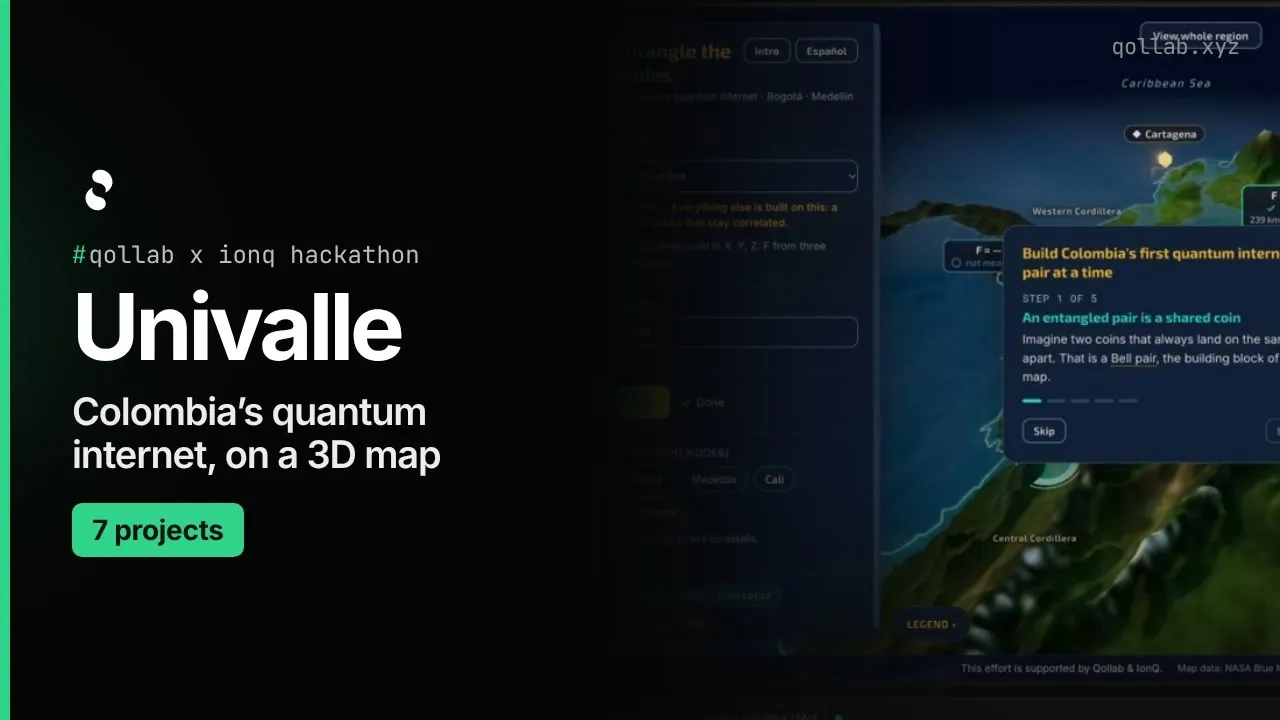
The projects include a co-op heist game, a BB84 simulator, a teleportation prototype, barrier option pricing and an IDE for constraint models. Every one of them is open source on Qollab.
The Universidad del Valle-QuanTIC node
Universidad del Valle, in Cali, Colombia, signed on in September. Its node carries the name of QuanTIC, the physics department's research group in quantum technology, information and complexity. Physics professors Paola Concha and Marcela Herrera led the node. Concha works on quantum information, open quantum systems and quantum computing. Herrera, a theoretical physicist in QuanTIC, works on quantum thermodynamics and quantum control.
This semester, QuanTIC holds a weekly seminar on quantum optics and quantum information. Its professors also run a quantum optics and quantum information lab, where the group has generated states of light and counted time-correlated single photons.
The projects were scored on novelty, technical execution, impact and documentation. The node's judging panel was Paola Concha, Marcela Herrera and Omar Calderón.
Node winner: Motus aberrans
Motus aberrans is a pixel-art role-playing game in three stages, set in real places in Cali. Jhon Esteban Peña Molina and Juan David Cuartas, team SquirBits, built the game. They are fifth-semester physics students at Universidad del Valle and met in a Physics II class.
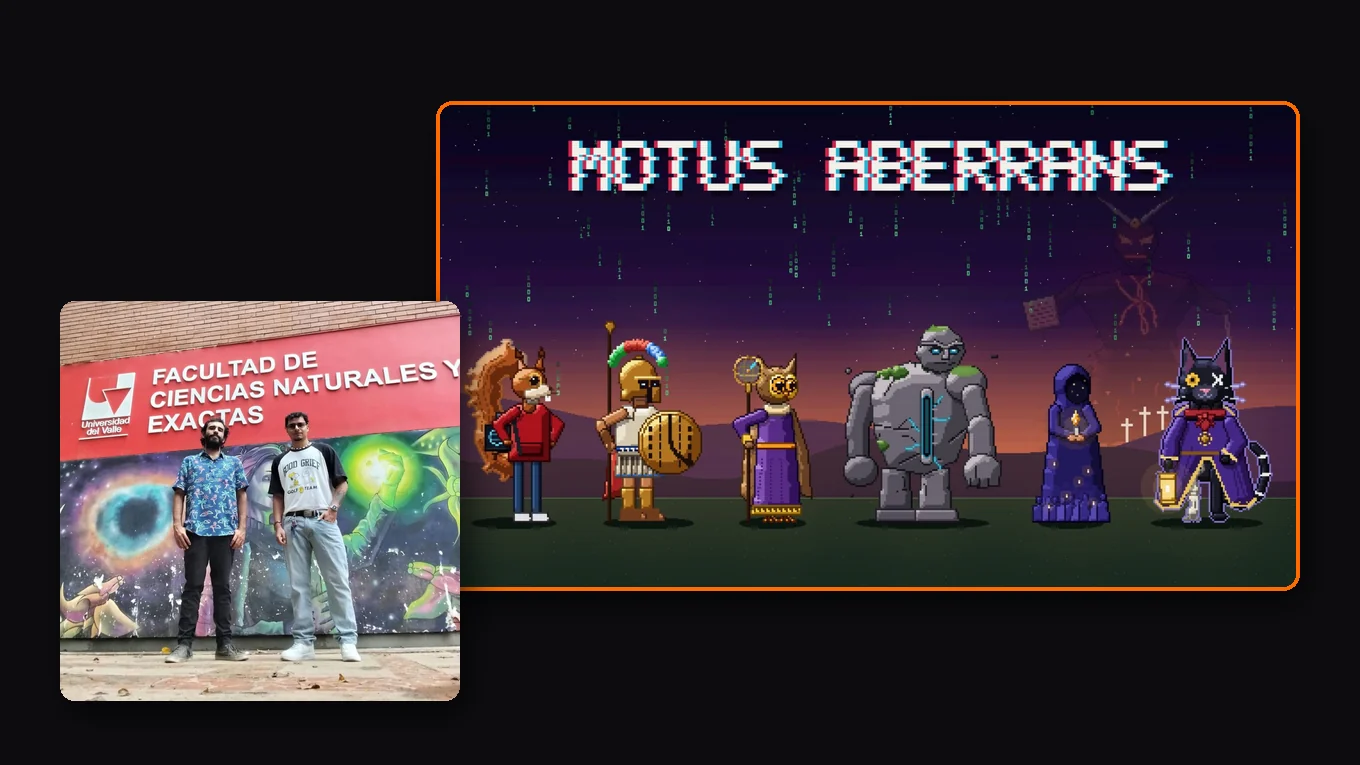
SquirBits' hardest problem was randomness, which the game needs everywhere. To supply it, Motus aberrans runs its 159 circuits once at start-up and keeps the results as a measurement bank. In battles, a hit lands only if your circuit gives the same distribution as the target. A shot from the measurement bank then settles the hit, so noise can deflect it. The final boss is noise itself, built on the error rates IonQ publishes.
Before the build weekend, Juan David leaned towards electromagnetism and Esteban towards cosmology and machine learning. "But Professor Paola Concha presented some quantum computing challenges that we couldn't turn down." Esteban led the team and worked out the physics behind each stage. Juan David, who teaches programming and robotics to children, did the design, code, art and story. He also composed the music: bambuco, salsa, Latin rock and parranda paisa.
Next is a free Motus aberrans 2.0 for Android and the web, followed by tests with high school students in Cali.
"Physics without cheats." Nothing quantum is fake. The direction of the paddle actually comes from a quantum Fourier transform. The entangled foxes come from Bell states, and in IonQ's noisy simulator, you can see their correlation drop.
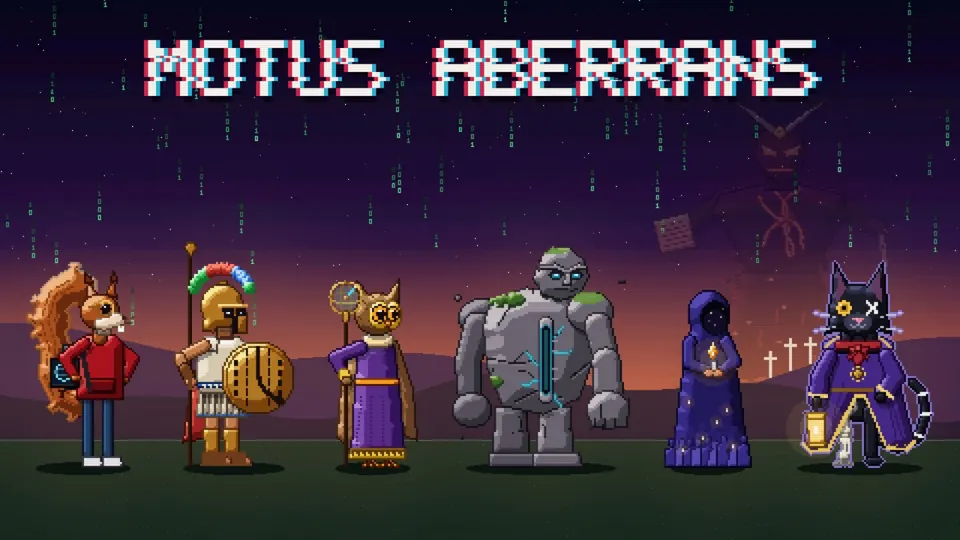 Motus aberransA game in Spanish and English that teaches superposition, entanglement and noise through circuits.
Every other project from Universidad del Valle-QuanTIC
Quantum communication came up in three of the other projects: BB84 Simulator, Entangle the Andes and Quantum Teleportation. Quantum Teleportation explains its topic with an everyday analogy, the maths and Qiskit code.
The other 6 projects entered at the node, A to Z.
- BB84 Simulator: A DV-QKD simulator that represents a quantum channel using the BB84 protocol to transmit a secret key between Alice and Bob.
- Bell Heist: A co-op heist game where the crew can't talk and entanglement is their only edge.
- Entangle the Andes: Build Colombia's first quantum internet, one Bell pair at a time.
- OptiQ: Declarative IDE for running MiniZinc code on quantum backends (Qiskit & IonQ).
- Quantum Barrier Option Pricing
- Quantum Teleportation: Prototipo educativo para estudiar la teleportación cuántica mediante explicaciones sencillas, una analogía cotidiana, desarrollo matemático, ejemplos visuales y código en Qiskit.
Universidad del Valle-QuanTIC on Qollab
Specialty awards follow on Wed Oct 28 and global winners on Thu Oct 29, and the Hackathon 2026 results page links to every node's post.
Open any project on Universidad del Valle-QuanTIC's node page on Qollab to read its code, run it and fork it. You can also follow the node there. The page shows the node's numbers, its members and node team, and all 7 hackathon projects.

Stay in the loop.
Get the latest tutorials, demos, and project showcases straight to your inbox. No noise, just the good stuff.
Enable JavaScript to sign up.
Qollab updates only. Unsubscribe any time. Privacy Policy.