Mines Society of Quantum Engineers winners: Qollab x IonQ Hackathon 2026
Three winning projects from 15 entered at the Mines Society of Quantum Engineers node.
At the Mines Society of Quantum Engineers node of the Qollab x IonQ Hackathon 2026, 20 teams signed up, 10 of them solo. Of the 20, 16 were on the student track and four on the professional track. The online build weekend ran from 7 PM ET on October 9 to 7 PM ET on October 11. In that time, seven of the 20 teams entered 15 projects.
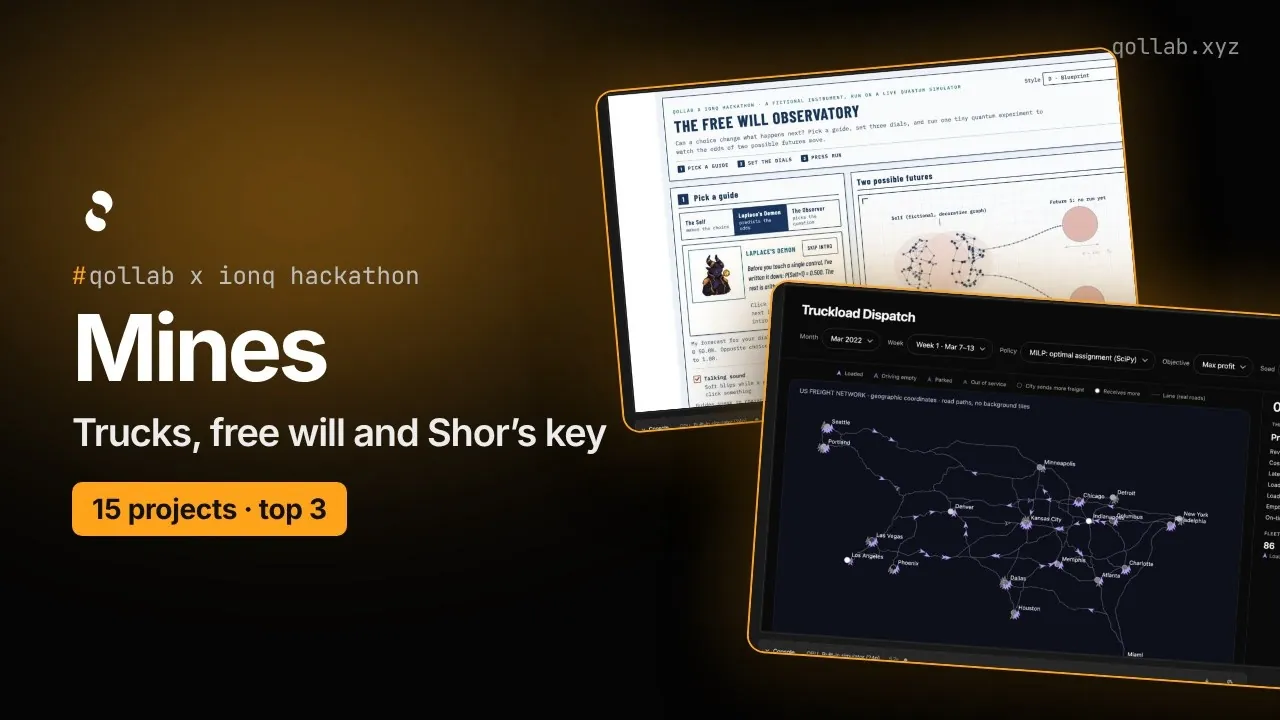
The projects range from Quantum Yahtzee and a Free Will Observatory to routing skiers down a mountain. Every one of them is open source on Qollab.
The Mines Society of Quantum Engineers node
The Society of Quantum Engineers, a student-led organization at Colorado School of Mines in Golden, Colorado, hosted the node. The society's events chair, Hiram Despain, led it with the president, Tony Peonio.
The society hosts a Quantum Lunch every Friday, with pizza most weeks, in the clubroom where it is building its own quantum lab. Its Qiskit Fall Fest at Mines returns from November 6 to 20, with Qiskit workshops, a two-weekend hackathon and Quantum Jeopardy.
The university offers a bachelor's degree in Quantum Systems Engineering, a minor in quantum engineering and master's programs in quantum software and hardware.
Tony Peonio and Margaux Basart of Colorado School of Mines scored the projects on novelty, technical execution, impact and documentation.
1st place: An Entangling Investigation
An Entangling Investigation is a point-and-click detective game built on the difference between ordinary correlation and entanglement. Romero Comprelli, a freshman in Quantum Systems Engineering at Colorado School of Mines, built it on his own. The Society of Quantum Engineers told him about the hackathon, and he came in with modest coding experience and little quantum background.
In the game, a museum needs to know which of its two devices produces entangled particles. One device prepares a Bell state with a Hadamard and a CNOT, and the other an equal mix of product states. Both look the same in the original measurement view, so players have to change the view to tell them apart.
Evidence comes as cards that players move around the desk, file in a notebook and attach to their report. Each output looks random on its own, and a magnifying glass shows the pairs side by side, where a shared pattern appears. Players can also conclude that the evidence is insufficient.
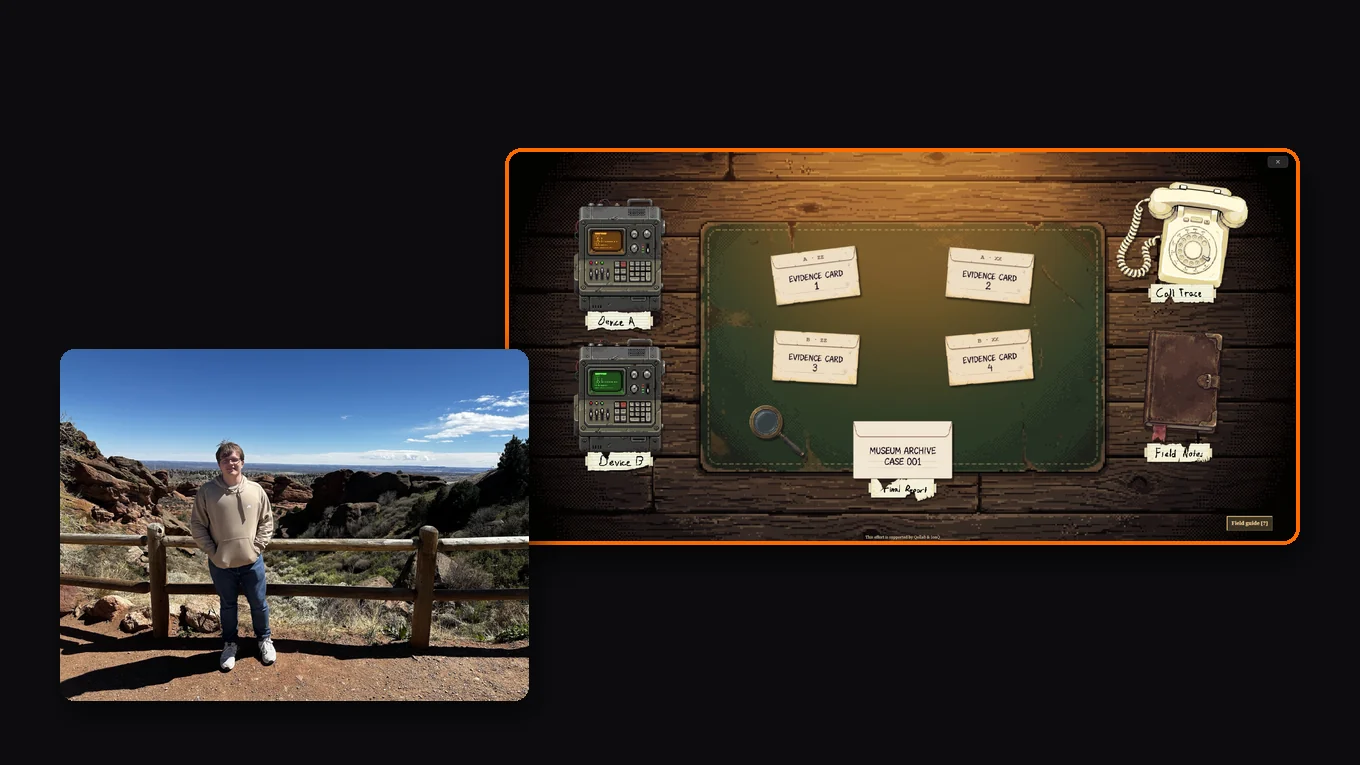
Romero's first version had the experiments and explanations but felt like a website. With no game-dev experience, he watched YouTube videos on what makes a good game, then added a clickable workbench and custom sprites. Next, he wants a second case built on a Bell inequality test. The CHSH circuits and analysis for it are already in the code.
Start with one question or topic you find interesting. You don’t need to understand the entire field before experimenting with a small circuit.
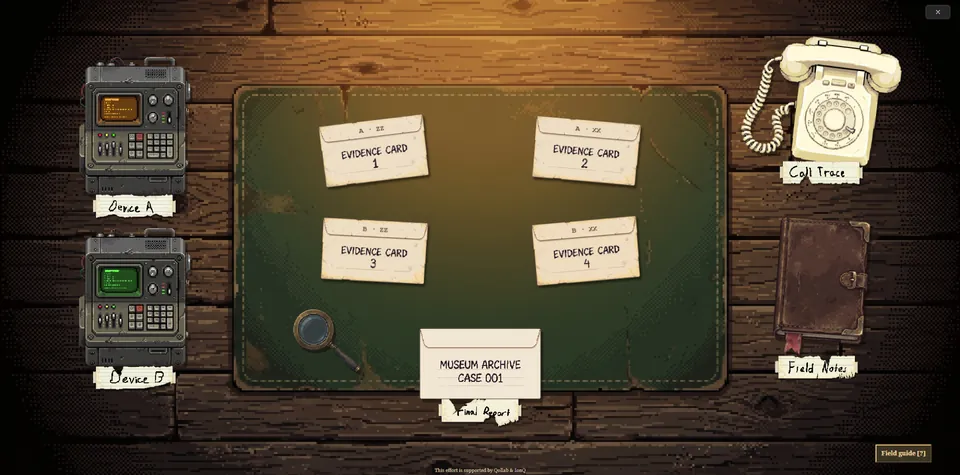 An Entangling InvestigationPredict each result, compare the evidence and build the case for entanglement.
2nd place: Quantum Bros
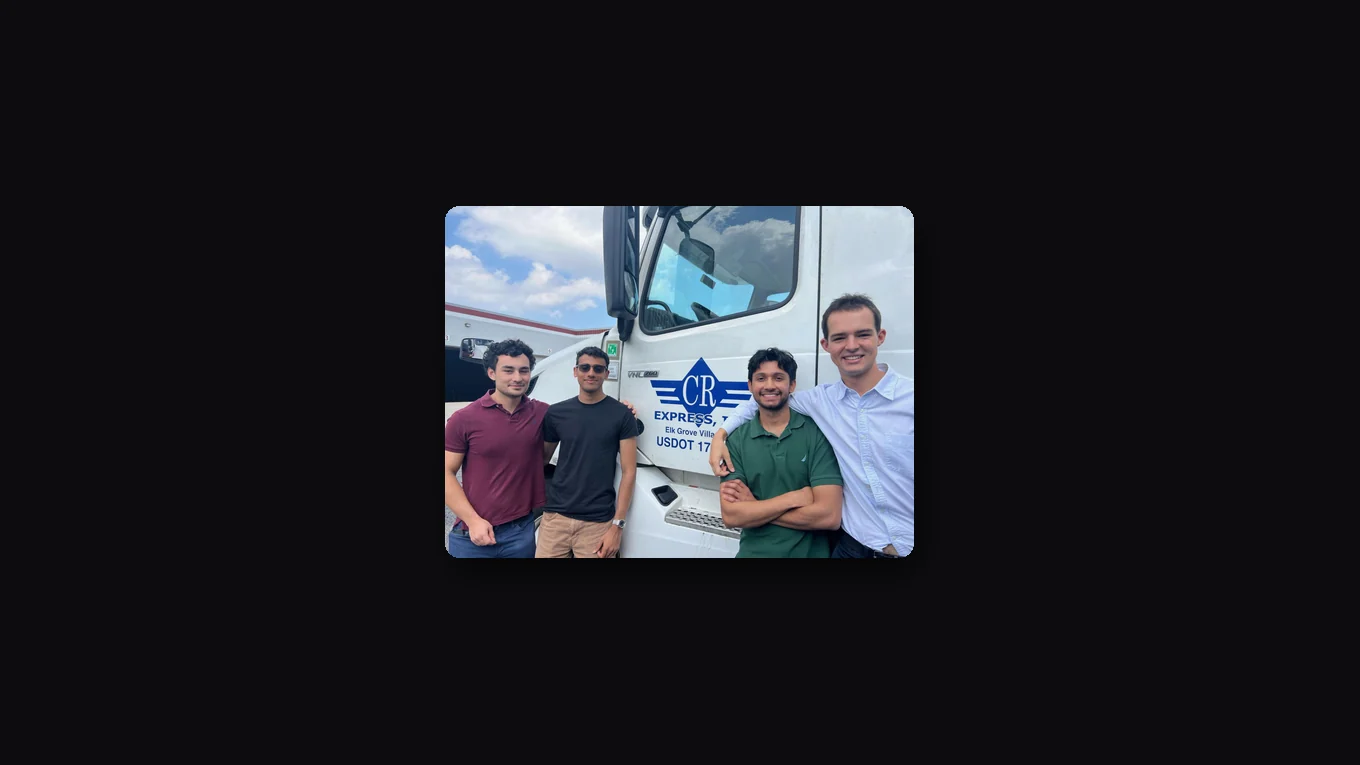
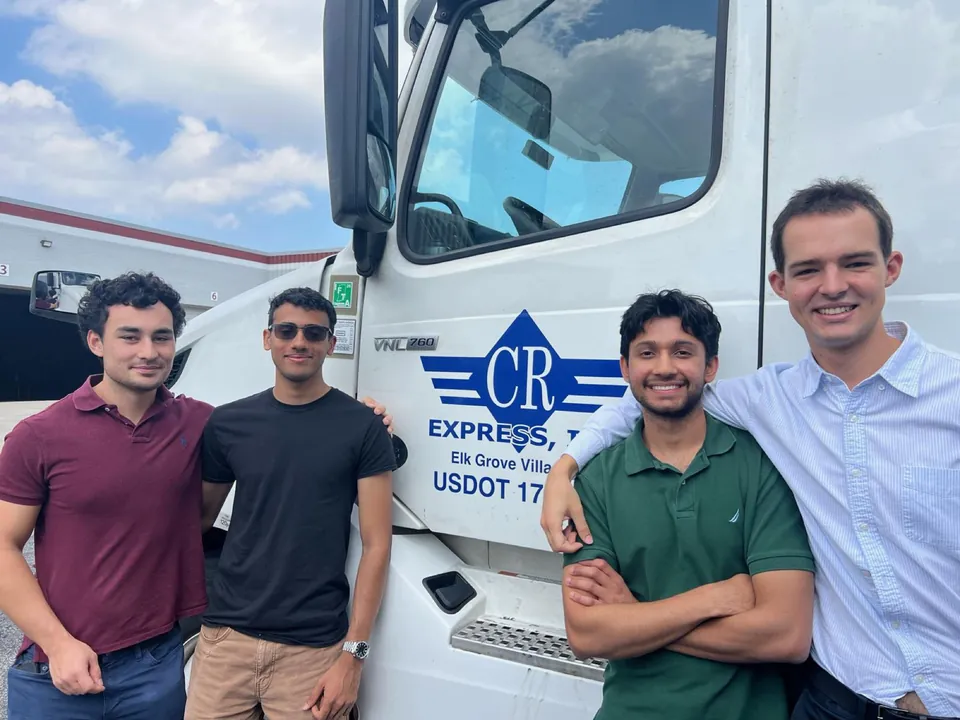
Quantum Bros turns a paper Sagar Patange co-wrote, on simulating quantum repeaters that distribute logical Bell pairs, into a game. Sagar presented the paper at IEEE Quantum Week in Toronto. Watching the audience there, he decided a clear message mattered more than covering every detail.
Sagar built Quantum Bros on his own for team Cartheon, which entered four projects at the node. He studies quantum engineering, economics and computer science at the University of Chicago, and runs a startup that builds decision tools for intermodal freight.
Level 1 shows how a quantum network generates entanglement. Later levels build a logical Bell pair and use it to send messages with quantum key distribution. In level 6, the BBM92 key exchange aborts once the error rate passes the 11% Shor-Preskill threshold. Levels 2 to 6 run in the browser on his own stabilizer engine, built on Qiskit's Clifford tableau and checked against Stim, Pauli by Pauli. All of the pixel art is drawn in code.
Sagar could not code on Saturday, so he pulled an all-nighter on Friday.
Before this weekend, I thought quantum computing was just fun. Now ADIDAQ: all day I dream about quantum.
 Quantum BrosA level-by-level game that teaches how to make a logical Bell pair and send messages with QKD.
3rd place: ZollerQu Unlocked
ZollerQu Unlocked shows a whole logical circuit end to end, on three distance-3 surface-code patches. Tushar Pandey and Oussama Turki, who met at an earlier hackathon, teamed up again as ZollerQu to build it. Teams picked a node when they signed up or let the Qollab team place them, and ZollerQu entered on the professional track.
Tushar, the quantum lead, has a math PhD from Texas A&M and is a senior software engineer at DataRobot. Oussama, the team captain, is in the second year of an M.Sc. in Quantum Engineering at Leibniz Universität Hannover. The idea came from something one of them had long wondered: how do you run circuit operations on logical qubits? Everything they read covered the pieces one at a time, never together.
In lesson 1, two checks light up red to point at the qubit you hit with an error, and the code corrects it. Lesson 2 shows nine ordinary CNOTs acting as one logical CNOT, which leaves two protected qubits entangled. The last two lessons make a T state and teleport it. The team ran the 27-qubit teleportation circuit on the IonQ Forte simulator. Every lesson runs next to the same experiment on physical qubits with the same noise, so you can see what the code changes.
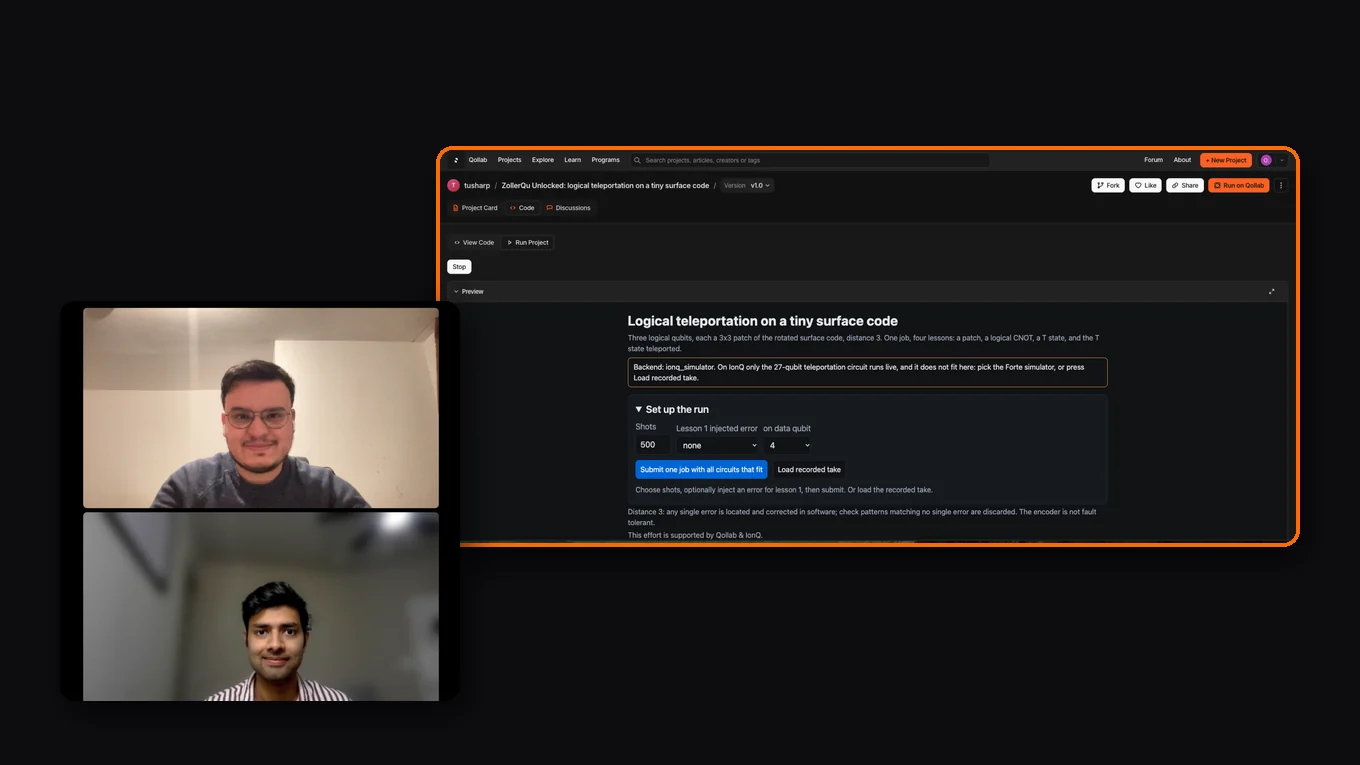
Next on the team's list are repeated check rounds with mid-circuit measurement and a run of the teleportation circuit on an IonQ Forte. ZollerQu also entered three more projects: ZollerQu placement, stocks_ZollerQu_v2 and mesh_ZollerQu_v2.
As a quantum researcher, I already knew a lot about the quantum part, but after this weekend, I realized how tricky it is to fit theory in practice for different use cases. There is no universal classical to quantum conversion trick.
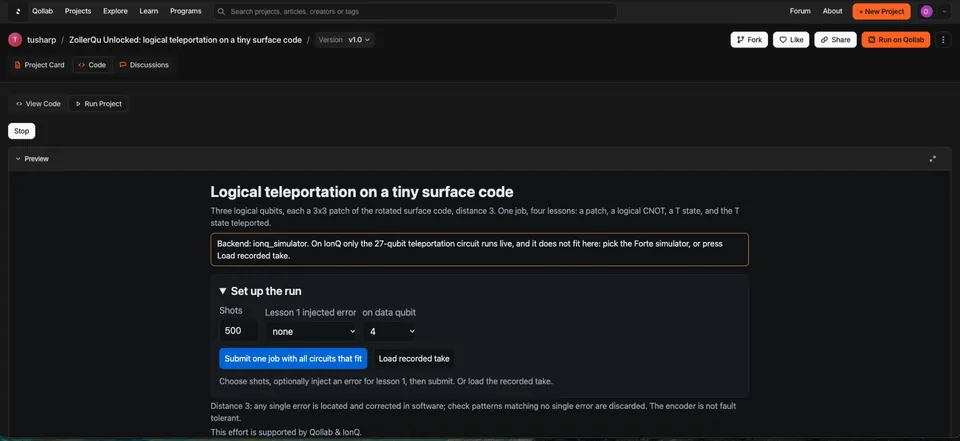 ZollerQu Unlocked: logical teleportation on a tiny surface codeFour animated lessons that take a tiny surface code from one error to logical teleportation.
Every other project from Mines Society of Quantum Engineers
Many of the other entries are optimization problems, from day-ahead energy scheduling to airline disruption recovery.
The other 12 projects entered at the node, A to Z.
- Energy Grid Optimization: Quantum-Assisted Day-Ahead Scheduling: Quantum-assisted day-ahead energy scheduling using SPP data and Qiskit QAOA.
- Free Will Observatory: The Free Will Observatory uses quantum simulations to explore free will as the capacity to reshape possible futures.
- Free-Space Optical (FSO) Drone QKD & Entanglement Purification: Securing drone command links via FSO Quantum Key Distribution (QKD).
- FreightDecisionIntelligence: A visual truckload-dispatch simulator that compares classical dispatch strategies and explores QAOA on competing load–truck assignments.
- ionAir: Mission Control: ionAir: Mission Control is an end-to-end quantum optimization platform designed to solve real-time airline flight disruption recovery.
- IonQ All-to-All Advantage Visualizer: Interactive benchmarking visualizer quantifying how IonQ all-to-all trapped-ion connectivity eliminates SWAP routing overhead and preserves state fidelity in non-local quantum circuits (QFT & QAOA).
- mesh_ZollerQu_v2
- Quantum Yahtzee
- QUASAR: Quantitative Unique Alpine Ski Altitude Routing (QUASAR) optimizes vertical descent on ski mountains with minimal overlap on runs and lists to increase skier and snowboarder enjoyment.
- Shor's Key: teaches Shor's algorithm as a pin-tumbler lock.
- stocks_ZollerQu_v2
- ZollerQu placement: store placement by quantum minimum finding: Where to put 4 stores in Champaign County, IL (census block groups, OSRM driving times).
Mines Society of Quantum Engineers on Qollab
Specialty awards follow on Wed Oct 28 and global winners on Thu Oct 29, and the Hackathon 2026 results page links to every node's post.
Open any project on Mines Society of Quantum Engineers' node page on Qollab to read its code, run it and fork it. You can also follow the node there. The page shows the node's numbers, its members and node team, and all 15 hackathon projects.
Stay in the loop.
Get the latest tutorials, demos, and project showcases straight to your inbox. No noise, just the good stuff.
Enable JavaScript to sign up.
Qollab updates only. Unsubscribe any time. Privacy Policy.